
Dini ni mfumo wa maishani
Thursday, May 17, 2012
HRW urges Zardari not to sign Human Rights Commission bill

Iran flouts UN sanctions, sends arms to Syria -panel
The UN Security Council has deployed a team of observers to Syria to monitor the tenuous ceasefire [EPA]
 Syria remains the top destination for Iranian arms shipments in violation of a UN Security Council ban on weapons exports by the Islamic Republic, according to a confidential report.
The report, submitted by a panel of sanctions-monitoring experts to the Security Council's Iran sanctions committee, said the panel investigated three large illegal shipments of Iranian weapons over the past year.
Iran, like Russia, is one of Syria's few allies as it presses ahead with a 14-month-old assault on opposition forces determined to oust Syrian President Bashar al-Assad.
The report comes as Tehran and the UN International Atomic Energy Agency try to narrow their differences on how to tackle concerns over Iran's atomic programme, and as Iran prepares for talks with the five permanent Security Council members and Germany in Iraq next week.
The report was leaked to the Reuters news agency hours after an article appeared in the Washington Post revealing how Syrian opposition fighters battling Assad's government are beginning to receive more, and better, weapons in an effort paid for by Gulf nations and co-ordinated partly by the US.
The article cited opposition activists and US and foreign officials, detailing how the administration has expanded contacts with opposition military forces to provide the Gulf nations with assessments of fighters' credibility and command-and-control infrastructure, the paper reported.
"We are increasing our nonlethal assistance to the Syrian opposition, and we continue to co-ordinate our efforts with friends and allies in the region and beyond in order to have the biggest impact on what we are collectively doing," a senior US state department official told the Post.
Illegal shipments
The panel on Iran said of the three shipments that it had investigated: "Iran has continued to defy the international community through illegal arms shipments.
"Two of these cases involved [Syria], as were the majority of cases inspected by the Panel during its previous mandate, underscoring that Syria continues to be the central party to illicit Iranian arms transfers."
The third shipment involved rockets that Britain said last year were headed for Taliban fighters in Afghanistan.
"The panel recommends the designation [blacklisting] of two entities related to these interdictions," it said.
"The report also takes note of information concerning arms shipments by Iran to other destinations."
The kinds of arms that Iran was attempting to send to Syria before the shipments were seized by Turkish authorities included assault rifles, machine guns, explosives, detonators, 60mm and 120mm mortal shells and other items, the panel said.
The most recent incident described in the report was an arms shipment discovered in a truck that Turkey seized on its border with Syria in February. Turkey announced last year that it was imposing an arms embargo on Syria.
Diplomats said that the panel's draft report may be changed by the Security Council's Iran sanctions committee before it is submitted to the council itself for consideration.
It was unclear how long it would take the committee to pass the report to the Security Council. Last year's expert panel report on Iran was never made public because Russia blocked its publication.
Circumventing sanctions
The report also discusses Iran's attempts to circumvent sanctions on its nuclear programme but notes that the four rounds of punitive measures the 15-nation Security Council imposed on Iran between 2006 and 2010 are having an impact.
In-depth coverage of a growing regional debate
"Sanctions are slowing Iran's procurement of some critical items required for its prohibited nuclear program," it said.
"At the same time prohibited activities continue, including uranium enrichment."
Among the items Iran has attempted to procure for its nuclear programme, the panel said, were nuclear-grade graphite, high-strength aluminum, aluminum, powder, specialised alloys, maraging steel, carbon fiber, magnets, vacuum pumps, turbines, electrical switchboards and helium gas detectors.
"The panel identifies the acquisition of high-grade carbon fibre as one of a number of critical items Iran requires for the development of more advanced centrifuges," the report said, adding that nations should be on alert for illicit attempts to acquire such items.
Iran rejects allegations by Western nations and their allies that it is secretly developing the capability to produce nuclear weapons.
It has refused to suspend its enrichment programme as demanded by the Security Council despite being hit with increasingly strong UN and various national sanctions
Syria remains the top destination for Iranian arms shipments in violation of a UN Security Council ban on weapons exports by the Islamic Republic, according to a confidential report.
The report, submitted by a panel of sanctions-monitoring experts to the Security Council's Iran sanctions committee, said the panel investigated three large illegal shipments of Iranian weapons over the past year.
Iran, like Russia, is one of Syria's few allies as it presses ahead with a 14-month-old assault on opposition forces determined to oust Syrian President Bashar al-Assad.
The report comes as Tehran and the UN International Atomic Energy Agency try to narrow their differences on how to tackle concerns over Iran's atomic programme, and as Iran prepares for talks with the five permanent Security Council members and Germany in Iraq next week.
The report was leaked to the Reuters news agency hours after an article appeared in the Washington Post revealing how Syrian opposition fighters battling Assad's government are beginning to receive more, and better, weapons in an effort paid for by Gulf nations and co-ordinated partly by the US.
The article cited opposition activists and US and foreign officials, detailing how the administration has expanded contacts with opposition military forces to provide the Gulf nations with assessments of fighters' credibility and command-and-control infrastructure, the paper reported.
"We are increasing our nonlethal assistance to the Syrian opposition, and we continue to co-ordinate our efforts with friends and allies in the region and beyond in order to have the biggest impact on what we are collectively doing," a senior US state department official told the Post.
Illegal shipments
The panel on Iran said of the three shipments that it had investigated: "Iran has continued to defy the international community through illegal arms shipments.
"Two of these cases involved [Syria], as were the majority of cases inspected by the Panel during its previous mandate, underscoring that Syria continues to be the central party to illicit Iranian arms transfers."
The third shipment involved rockets that Britain said last year were headed for Taliban fighters in Afghanistan.
"The panel recommends the designation [blacklisting] of two entities related to these interdictions," it said.
"The report also takes note of information concerning arms shipments by Iran to other destinations."
The kinds of arms that Iran was attempting to send to Syria before the shipments were seized by Turkish authorities included assault rifles, machine guns, explosives, detonators, 60mm and 120mm mortal shells and other items, the panel said.
The most recent incident described in the report was an arms shipment discovered in a truck that Turkey seized on its border with Syria in February. Turkey announced last year that it was imposing an arms embargo on Syria.
Diplomats said that the panel's draft report may be changed by the Security Council's Iran sanctions committee before it is submitted to the council itself for consideration.
It was unclear how long it would take the committee to pass the report to the Security Council. Last year's expert panel report on Iran was never made public because Russia blocked its publication.
Circumventing sanctions
The report also discusses Iran's attempts to circumvent sanctions on its nuclear programme but notes that the four rounds of punitive measures the 15-nation Security Council imposed on Iran between 2006 and 2010 are having an impact.
In-depth coverage of a growing regional debate
"Sanctions are slowing Iran's procurement of some critical items required for its prohibited nuclear program," it said.
"At the same time prohibited activities continue, including uranium enrichment."
Among the items Iran has attempted to procure for its nuclear programme, the panel said, were nuclear-grade graphite, high-strength aluminum, aluminum, powder, specialised alloys, maraging steel, carbon fiber, magnets, vacuum pumps, turbines, electrical switchboards and helium gas detectors.
"The panel identifies the acquisition of high-grade carbon fibre as one of a number of critical items Iran requires for the development of more advanced centrifuges," the report said, adding that nations should be on alert for illicit attempts to acquire such items.
Iran rejects allegations by Western nations and their allies that it is secretly developing the capability to produce nuclear weapons.
It has refused to suspend its enrichment programme as demanded by the Security Council despite being hit with increasingly strong UN and various national sanctions

Racialising sexual crimes
A grooming case in the UK highlights the need to stop blaming entire communities for the crimes of individuals.
Nine men were found guilty of child sexual exploitation in the Lancashire town of Rochdale [Al Jazeera]
 London, United Kingdom - The news that nine men have been found guilty of child sex abuse in Rochdale has created widespread revulsion. The disclosure in Liverpool Crown Court that the men plied their victims with drink and drugs so they could "pass them around" and use them for sex was vile. One of the girls "groomed" was as young as 13.
The case involved Asian perpetrators and white victims. The far-right British National Party (BNP) is gloating that Nick Griffin, its leader, is now "vindicated" on his past comments about "Muslim paedophile gangs". Meanwhile, the head of the Rochdale-based Ramadhan Foundation, Mohammed Shafiq, has accused Pakistani community leaders of "burying their heads in the sand" on the issue of street grooming. However - and, perhaps confusingly for the outside observer - the police insist the grooming was not "racially motivated".
Let us be clear: Sex with underage minors is a crime. A crime is a crime, whether it is committed by a white, black or Asian person. It remains a crime if done by a Muslim or Christian, a Jew, Hindu, Buddhist or atheist. To every right-thinking member of society, street grooming of under-age vulnerable girls is despicable. There is no justification for it whatsoever, nor should shame from any one sector of a community be used as a cloak to allow this sort of behaviour to continue.
We must expose abuse and make sure the authorities react. But pointing fingers at certain communities without comprehensive concrete research could be a distraction. Scapegoating may even deflect society from the main issue (sexual abuse) and lead us to focus excessively on one small part of an overall problem, leading to further social division. "Racialising" the crime with claims about Muslim men grooming white girls could hide legitimate worries about a system that fails victims of abuse.
Crime of individuals
An entire community should not be blamed for the crimes of its individuals; in 2009, eight white men were found guilty in Scotland of a catalogue of charges relating to child abuse. We must address the issue firmly and objectively. Community and civil society groups, youth centres, religious institutions - along with relevant statutory agencies, including the police, children's services and the third sector must come on board to tackle this in a holistic way.
"At the moment, our nationwide figures on on-street grooming are still patchy and incomplete", according to UCL researchers Ella Cockbain and Helen Brayley in the Guardian. They believe that white offenders make up the majority of lone street groomers, but when it comes to group groomers, Asian youth of Pakistani origin are found in disproportionately high numbers.
"Nonetheless, it is crucial to remember that these cases do not paint a full picture of this crime," say Cockbain and Brayley. "We need a better, more efficient system of data collection and collation. What's more, these data need to be comparable and consistent across the country and across different agencies involved."
Expressions such as "conspiracy of silence", "political correctness" and "fear of appearing racist" are not helpful. Some communities may have a disproportionate presence in certain crimes, but that does not necessarily give the full picture surrounding those crimes. Nor should this allow politicians and media to vilify those communities; the result could be handing over ammunitions to hate groups such as the BNP and the English Defence League (EDL), who in their very black-and-white discourse blame Muslims for many awful things in our country.
On 'Muslim' criminals
Islam is the religion of some of the criminals recently convicted. However, even extra-marital sex is totally unacceptable in our faith. A story at the time of Islam’s Prophet (peace and blessings be upon him) is highly relevant to understanding Islam’s position on the recent grooming saga:
"It is vital that wider society and the state itself employ all in their armoury to prevent problems from arising and bring offenders to justice."
A man came to the Prophet and asked his permission to have sex (outside marriage) with other women.
The Prophet asked: "Would you like it if other men commit such acts with your mother, sister, wife or daughter?"
The man said: "No."
The Prophet then said: "Well, then why do you want to commit such vile acts which you hate for your own womenfolk?"
The Prophet then prayed for the protection of this man’s soul from such evil.
These men convicted in Rochdale may have been nominally Muslim, but they were clearly not practising the true essence of their faith. Many so-called "Muslim criminals" (as identified by the media) are in fact people who might drink, take drugs or engage in other practices considered haram ["forbidden"]. Individuals who commit abuse are abusers, full stop.
It is vital that all of us - including those in any community where group-level abuse has taken place - take the matter seriously. Community members must wake up to why this is happening in their midst. And they must find ways to eradicate it, through better awareness, education, religious sermons, improved neighbourhood watch, youth work, parenting courses and so on. At the same time, it is also vital that wider society and the state itself employ all in their armoury to prevent problems from arising and bring offenders to justice. We need strong deterrents in the form of punishments in order to discourage future sex offenders.
Children, whether young or teenage, are our treasure and trust. Our life centres around our children. They are our future.
We need to safeguard them from social ills and protect them from harm. We must not hide from our duty as parents, and as a society, to our youngest and most vulnerable people.
Dr Muhammad Abdul Bari is a parenting consultant (www.amanaparenting.com). He is a founding member of The East London Communities Organisation (TELCO), Chairman of the East London Mosque Trust, and former Secretary General of the Muslim Council of Britain (2006-10).
Follow him on Twitter: @MAbdulBari
The views expressed in this article are the author's own and do not necessarily reflect Al Jazeera's editorial policy.
London, United Kingdom - The news that nine men have been found guilty of child sex abuse in Rochdale has created widespread revulsion. The disclosure in Liverpool Crown Court that the men plied their victims with drink and drugs so they could "pass them around" and use them for sex was vile. One of the girls "groomed" was as young as 13.
The case involved Asian perpetrators and white victims. The far-right British National Party (BNP) is gloating that Nick Griffin, its leader, is now "vindicated" on his past comments about "Muslim paedophile gangs". Meanwhile, the head of the Rochdale-based Ramadhan Foundation, Mohammed Shafiq, has accused Pakistani community leaders of "burying their heads in the sand" on the issue of street grooming. However - and, perhaps confusingly for the outside observer - the police insist the grooming was not "racially motivated".
Let us be clear: Sex with underage minors is a crime. A crime is a crime, whether it is committed by a white, black or Asian person. It remains a crime if done by a Muslim or Christian, a Jew, Hindu, Buddhist or atheist. To every right-thinking member of society, street grooming of under-age vulnerable girls is despicable. There is no justification for it whatsoever, nor should shame from any one sector of a community be used as a cloak to allow this sort of behaviour to continue.
We must expose abuse and make sure the authorities react. But pointing fingers at certain communities without comprehensive concrete research could be a distraction. Scapegoating may even deflect society from the main issue (sexual abuse) and lead us to focus excessively on one small part of an overall problem, leading to further social division. "Racialising" the crime with claims about Muslim men grooming white girls could hide legitimate worries about a system that fails victims of abuse.
Crime of individuals
An entire community should not be blamed for the crimes of its individuals; in 2009, eight white men were found guilty in Scotland of a catalogue of charges relating to child abuse. We must address the issue firmly and objectively. Community and civil society groups, youth centres, religious institutions - along with relevant statutory agencies, including the police, children's services and the third sector must come on board to tackle this in a holistic way.
"At the moment, our nationwide figures on on-street grooming are still patchy and incomplete", according to UCL researchers Ella Cockbain and Helen Brayley in the Guardian. They believe that white offenders make up the majority of lone street groomers, but when it comes to group groomers, Asian youth of Pakistani origin are found in disproportionately high numbers.
"Nonetheless, it is crucial to remember that these cases do not paint a full picture of this crime," say Cockbain and Brayley. "We need a better, more efficient system of data collection and collation. What's more, these data need to be comparable and consistent across the country and across different agencies involved."
Expressions such as "conspiracy of silence", "political correctness" and "fear of appearing racist" are not helpful. Some communities may have a disproportionate presence in certain crimes, but that does not necessarily give the full picture surrounding those crimes. Nor should this allow politicians and media to vilify those communities; the result could be handing over ammunitions to hate groups such as the BNP and the English Defence League (EDL), who in their very black-and-white discourse blame Muslims for many awful things in our country.
On 'Muslim' criminals
Islam is the religion of some of the criminals recently convicted. However, even extra-marital sex is totally unacceptable in our faith. A story at the time of Islam’s Prophet (peace and blessings be upon him) is highly relevant to understanding Islam’s position on the recent grooming saga:
"It is vital that wider society and the state itself employ all in their armoury to prevent problems from arising and bring offenders to justice."
A man came to the Prophet and asked his permission to have sex (outside marriage) with other women.
The Prophet asked: "Would you like it if other men commit such acts with your mother, sister, wife or daughter?"
The man said: "No."
The Prophet then said: "Well, then why do you want to commit such vile acts which you hate for your own womenfolk?"
The Prophet then prayed for the protection of this man’s soul from such evil.
These men convicted in Rochdale may have been nominally Muslim, but they were clearly not practising the true essence of their faith. Many so-called "Muslim criminals" (as identified by the media) are in fact people who might drink, take drugs or engage in other practices considered haram ["forbidden"]. Individuals who commit abuse are abusers, full stop.
It is vital that all of us - including those in any community where group-level abuse has taken place - take the matter seriously. Community members must wake up to why this is happening in their midst. And they must find ways to eradicate it, through better awareness, education, religious sermons, improved neighbourhood watch, youth work, parenting courses and so on. At the same time, it is also vital that wider society and the state itself employ all in their armoury to prevent problems from arising and bring offenders to justice. We need strong deterrents in the form of punishments in order to discourage future sex offenders.
Children, whether young or teenage, are our treasure and trust. Our life centres around our children. They are our future.
We need to safeguard them from social ills and protect them from harm. We must not hide from our duty as parents, and as a society, to our youngest and most vulnerable people.
Dr Muhammad Abdul Bari is a parenting consultant (www.amanaparenting.com). He is a founding member of The East London Communities Organisation (TELCO), Chairman of the East London Mosque Trust, and former Secretary General of the Muslim Council of Britain (2006-10).
Follow him on Twitter: @MAbdulBari
The views expressed in this article are the author's own and do not necessarily reflect Al Jazeera's editorial policy.

Lover Boys
This is the story of Ibrahim, a Dutch-Moroccan man tackling the taboo problem of sex-trafficking within his community.
 This is the story of Ibrahim, a courageous Dutch-Moroccan social worker in the Netherlands who is tackling the high incidences of sex-trafficking of young Dutch girls by their so-called 'boyfriends' - the Lover Boys - the majority of whom are Dutch-Moroccan.
It is a taboo subject, but Ibrahim and his allies, including a local sheikh, are determined to remove this stain from their community.
This raw and often graphic film introduces us to both perpetrators and victims of this branch of internal sex-trafficking.
Ibrahim does preventative work with vulnerable young men in youth clubs as well as political lobbying to get the matter addressed in his local authority.
The complications of working in a country where prostitution is legal for over 18s, as well as cultural taboos within his own community, make for many challenges - and he is only too aware that right-wing elements thrive on any vulnerabilities among immigrant groups.
The film includes a disguised interview with a former Lover Boy, as well as harrowing and graphic testimonies from young women who were pimped by their 'boyfriends' when aged 12 and 15.
This is the story of Ibrahim, a courageous Dutch-Moroccan social worker in the Netherlands who is tackling the high incidences of sex-trafficking of young Dutch girls by their so-called 'boyfriends' - the Lover Boys - the majority of whom are Dutch-Moroccan.
It is a taboo subject, but Ibrahim and his allies, including a local sheikh, are determined to remove this stain from their community.
This raw and often graphic film introduces us to both perpetrators and victims of this branch of internal sex-trafficking.
Ibrahim does preventative work with vulnerable young men in youth clubs as well as political lobbying to get the matter addressed in his local authority.
The complications of working in a country where prostitution is legal for over 18s, as well as cultural taboos within his own community, make for many challenges - and he is only too aware that right-wing elements thrive on any vulnerabilities among immigrant groups.
The film includes a disguised interview with a former Lover Boy, as well as harrowing and graphic testimonies from young women who were pimped by their 'boyfriends' when aged 12 and 15.
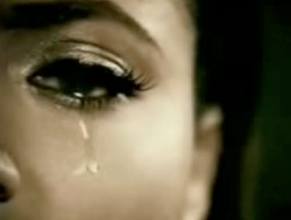 NOTE: This film contains some graphic descriptions of sexual abuse and some strong language which has been appropriately beeped.
By Ibrahim Wijbenga
I got involved in the battle against human trafficking - and in particular against the young pimps sometimes referred to as 'Lover Boys' - in 2003.
It is a term too lovely to convey the horror of their actions: buying girls gifts and fancy clothes with the aim of gradually establishing a tighter grip over their lives and eventually forcing them into prostitution.
In the Netherlands, many 'Lover Boys' - and some of their victims - are of Moroccan origin. It was this connection to the country of my own roots that inspired me to gather more information on them and their practices.
'Lover Boys' often seduce girls with gifts and promises of easy money. But when those girls are from their own community, they also abuse the culture of that community for their own ends. Once a girl from that community has lost her virginity to a 'Lover Boy' she has little choice but to stay with him for the other men in her community are unlikely to befriend or marry her.
We knew that getting a hold on these boys would not only be a task for the police, but that it would require getting the inside track on them - using the forces within their community for prevention and utilising the power of Islam and our imams, who have a strategically important position within the Moroccan community.
Most of the young men involved in this form of criminality are not scared of a judge, the police or the prison system - but they are sensitive to the standards of honour within their own community and will listen to the imams; they are, after all, Muslim.
"They use promises of love, romance and even marriage to win the trust of young girls who they then trick into working as prostitutes .... But because pimping is legal in the Netherlands, it is easy for them to operate below the radar."
Read more of the filmmaker's view
We sought to confront them through both direct and indirect methods with anti-propaganda against pimping as our central goal. Our aim was to make the pimps lose face, to turn them into the laughing stock of their community and to create an environment in which, if you are a pimp, you are considered the biggest loser of all - a man without honour and the lowest form of criminal.
Initially two imams, Abu Bakr el Fadil and Ahmed el Ouazzani, began the process of information gathering and started using the Friday prayer to launch a campaign on the issue of youth criminality, especially the problem of forced prostitution and pimping among Moroccan youth.
After some time I set up a network of imams, including well-known imams such as Sheikh Shershaby, Sheikh Jneid Fawaz and Sheikh al Bakkali, who took the battle against 'Lover Boys' nationwide.
We also started an information campaign to warn young girls about the practices of 'Lover Boys' and worked to inform their parents about the practices of our youngsters.
I also visited various courts across Holland and saw cases of 'Lover Boys' in Utrecht, Den Bosch, Rotterdam, Arnhem and in The Hague. I attended court sessions on human trafficking by young men. Unfortunately, many of them did not receive any penalty or punishment due to lack of evidence or because their victims withdrew their cases. Often the victims I saw at the courts were young Dutch women, while many of the suspects came from immigrant communities and were of Surinamese, Antillean, Moroccan or Turkish backgrounds.
Around this time I collaborated with Frank Bovenkerk, a professor from Utrecht who wrote a book on this matter. He essentially identified the same pattern: predominantly Dutch victims and suspects from various cultural backgrounds. We began contributing to the discussion of this topic within political parties and contacted the ministry of justice to see how we could best help each other.
My focus remained on the young men, but also on working with the parents of young girls who often did not know that their daughter was a victim of a 'Lover Boy'.
As a result of our efforts, we have successfully reduced the number of Moroccan men involved in pimping. But I have recently seen a new development - the emergence of 'Lover Girls'. These girls often work for 'Lover Boys' although they sometimes operate alone - becoming friends with a victim and then dragging them into prostitution. Now they too have become targets of our information campaigns.
As our community has grown increasingly aware of the existence of 'Lover Boys', their practices have become a hot topic of discussion in mosques and schools. We have had to confront those groups and political parties who have sought to use the fact that some Moroccan youth have been involved in this form of criminality to turn the general population against the Muslim community in its entirety. But it all starts with educating the young people in our community. If they have positive role models - good brothers and sisters - then good schools and neighbourhoods will follow.
Islam teaches us to be good fathers and role models, to obey the law and to give the best of ourselves. If we can beat the threats to our community and the criminality within our ranks, then we can easily have harmony within Dutch society
NOTE: This film contains some graphic descriptions of sexual abuse and some strong language which has been appropriately beeped.
By Ibrahim Wijbenga
I got involved in the battle against human trafficking - and in particular against the young pimps sometimes referred to as 'Lover Boys' - in 2003.
It is a term too lovely to convey the horror of their actions: buying girls gifts and fancy clothes with the aim of gradually establishing a tighter grip over their lives and eventually forcing them into prostitution.
In the Netherlands, many 'Lover Boys' - and some of their victims - are of Moroccan origin. It was this connection to the country of my own roots that inspired me to gather more information on them and their practices.
'Lover Boys' often seduce girls with gifts and promises of easy money. But when those girls are from their own community, they also abuse the culture of that community for their own ends. Once a girl from that community has lost her virginity to a 'Lover Boy' she has little choice but to stay with him for the other men in her community are unlikely to befriend or marry her.
We knew that getting a hold on these boys would not only be a task for the police, but that it would require getting the inside track on them - using the forces within their community for prevention and utilising the power of Islam and our imams, who have a strategically important position within the Moroccan community.
Most of the young men involved in this form of criminality are not scared of a judge, the police or the prison system - but they are sensitive to the standards of honour within their own community and will listen to the imams; they are, after all, Muslim.
"They use promises of love, romance and even marriage to win the trust of young girls who they then trick into working as prostitutes .... But because pimping is legal in the Netherlands, it is easy for them to operate below the radar."
Read more of the filmmaker's view
We sought to confront them through both direct and indirect methods with anti-propaganda against pimping as our central goal. Our aim was to make the pimps lose face, to turn them into the laughing stock of their community and to create an environment in which, if you are a pimp, you are considered the biggest loser of all - a man without honour and the lowest form of criminal.
Initially two imams, Abu Bakr el Fadil and Ahmed el Ouazzani, began the process of information gathering and started using the Friday prayer to launch a campaign on the issue of youth criminality, especially the problem of forced prostitution and pimping among Moroccan youth.
After some time I set up a network of imams, including well-known imams such as Sheikh Shershaby, Sheikh Jneid Fawaz and Sheikh al Bakkali, who took the battle against 'Lover Boys' nationwide.
We also started an information campaign to warn young girls about the practices of 'Lover Boys' and worked to inform their parents about the practices of our youngsters.
I also visited various courts across Holland and saw cases of 'Lover Boys' in Utrecht, Den Bosch, Rotterdam, Arnhem and in The Hague. I attended court sessions on human trafficking by young men. Unfortunately, many of them did not receive any penalty or punishment due to lack of evidence or because their victims withdrew their cases. Often the victims I saw at the courts were young Dutch women, while many of the suspects came from immigrant communities and were of Surinamese, Antillean, Moroccan or Turkish backgrounds.
Around this time I collaborated with Frank Bovenkerk, a professor from Utrecht who wrote a book on this matter. He essentially identified the same pattern: predominantly Dutch victims and suspects from various cultural backgrounds. We began contributing to the discussion of this topic within political parties and contacted the ministry of justice to see how we could best help each other.
My focus remained on the young men, but also on working with the parents of young girls who often did not know that their daughter was a victim of a 'Lover Boy'.
As a result of our efforts, we have successfully reduced the number of Moroccan men involved in pimping. But I have recently seen a new development - the emergence of 'Lover Girls'. These girls often work for 'Lover Boys' although they sometimes operate alone - becoming friends with a victim and then dragging them into prostitution. Now they too have become targets of our information campaigns.
As our community has grown increasingly aware of the existence of 'Lover Boys', their practices have become a hot topic of discussion in mosques and schools. We have had to confront those groups and political parties who have sought to use the fact that some Moroccan youth have been involved in this form of criminality to turn the general population against the Muslim community in its entirety. But it all starts with educating the young people in our community. If they have positive role models - good brothers and sisters - then good schools and neighbourhoods will follow.
Islam teaches us to be good fathers and role models, to obey the law and to give the best of ourselves. If we can beat the threats to our community and the criminality within our ranks, then we can easily have harmony within Dutch society


Monday, May 14, 2012
Art, culture and cuisine in Qatar


Saturday, May 12, 2012

Who is Jesus Christ ?

Subscribe to:
Posts (Atom)